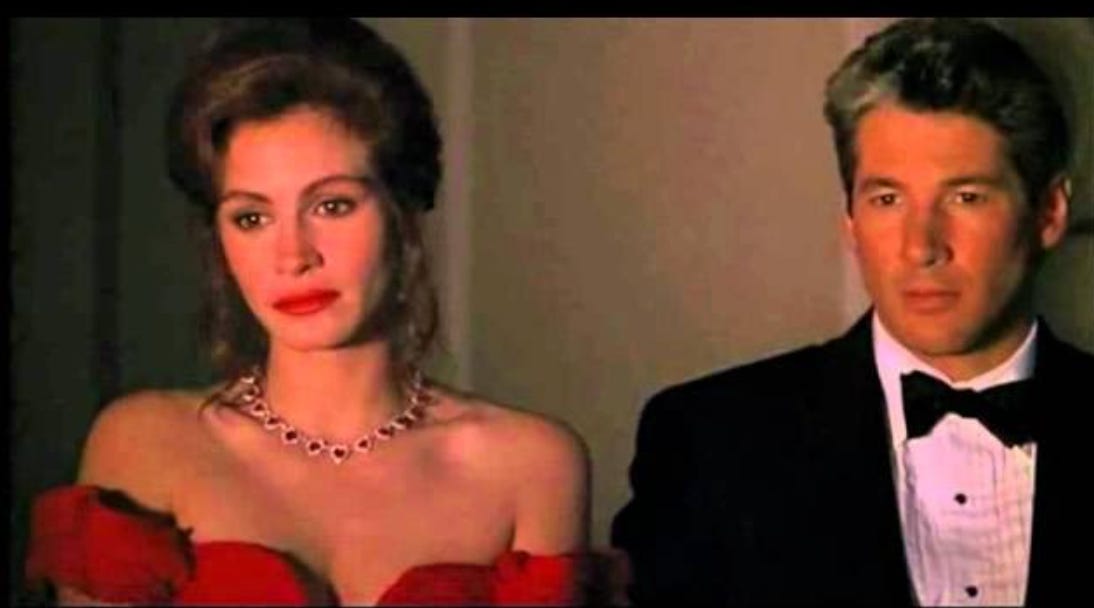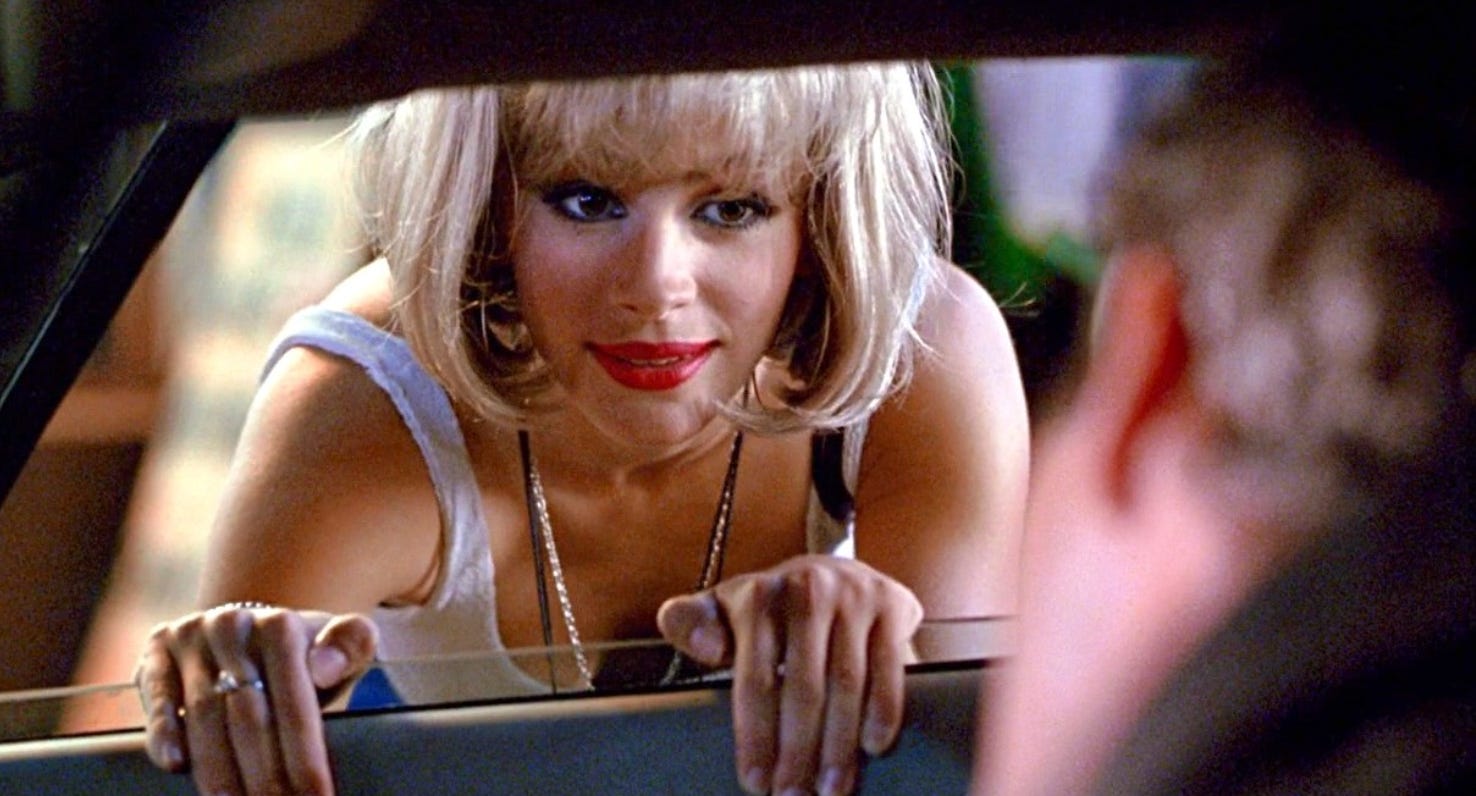
Pretty Woman came out 36 years ago this weekend—March 23, 1990. I’m pretty sure I saw it opening day. That week, the entire universe fell in love and stayed in love with Julia Roberts, who became the undisputed queen of all popcorn movie stars. The female Tom Cruise, with that big toothy grin American audiences can’t get enough of.
(It also didn’t occur to me until this watching that casting Richard Gere as the john is a bit of funny casting, since he first became famous as a leading man by playing a Beverly Hills prostitute himself in American Gigolo ten years earlier.)
It’s a great comedy, and a highly entertaining modern-day fairy tale starring two of the best looking movie stars of the 20th century. As I rewatched it last week, I realized it is also a wonderful primer to American values of the late 20th century; a paean to our long-lost ideals.
You all know the Pretty Woman plot: it’s a 1990s Cinderella, only she’s a Hollywood street walker and he’s some sort of Wall Street tycoon with terrible taste in ties. Disney famously toned down the original script and its drug-addled hooker leading lady. The original title was $3000, after the amount of money Edward offers Vivian for the week-long job.
No romantic comedy since has ever been able to top it. In the end, it’s about an uncouth but great-looking American defeating the hidebound, snobbish cultural elites and coming out on top—based on old-fashioned American qualities like charm, sex appeal, honesty, generosity, common sense, and bootstrapped opportunism.
In the wholesome, PG-rated version that got made, Roberts plays a hooker, yes, but she’s never taken drugs, has no personal vices, and is clean, gorgeous, and has a child-like fascination with the world. Watching it now you are struck by how the filmmakers get the audience to forget what she does for a living. Americans are a forgiving and benevolent people, and want to absolve her of her sins immediately—especially when she lays out her sob story. Vivian opens up about her career only once, when she tells Richard Gere how she fell into her line of work. “I had to pay the rent, so I tried it. The first time I did it, I cried the whole time. But then I got some regulars, and it’s not so bad.” The poor dear! All judgement of her lifestyle is forgiven, and the audience can root for her redemption.
We learn that she followed a boyfriend to L.A., they broke up, so it was either prostitution or homelessness. (No one told her to try modeling or acting?) She later reveals that she dropped out of high school in 10th grade, and is planning to go back to get her degree—she’s smart, you see. “I got pretty good grades, actually.”
In the end, she manages to win over the prince despite her lack of good breeding thanks to her homespun charm, soulful earnestness, and that iconic all-American beauty.
The movie, it turns out, is an incredible time capsule of how Hollywood used to think about Americans—and what we used to value ourselves.
Lesson 1: Class Doesn’t Matter When You’re Pure of Heart